
A homeowner is sitting on the couch after work, phone in hand, trying to schedule a service appointment.
Maybe she needs a contractor to take a look at her deck. Maybe her furnace is making a strange noise. Maybe she is comparing a few local businesses before deciding who to hire.
She clicks on the first company's website.
The page loads slowly. The menu is hard to tap. The “Contact Us” button takes her to a clunky form with too many fields. The phone number is buried at the bottom of the page. She tries pinching and zooming, gets frustrated, and leaves.
Then she clicks on the next business.
That company has a clean mobile website, a simple quote request form, visible reviews, and an easy button that says, “Request an Appointment.” Within minutes, she gets a text or email letting her know someone received her request.
Which business do you think is more likely to win the job?
That is why fast lead response matters. A better website is not just about looking modern. It is about making it easier for real customers to take action before they move on.
Mobile website traffic has changed customer expectations
For service businesses, the mobile experience is now one of the most important parts of lead generation. Many local service companies should plan as if most of their website visitors are coming from phones, and in some cases, their own analytics may show mobile traffic approaching 70%.
Even globally, mobile has become the largest web category. Statcounter reported that mobile represented 53.65% of worldwide desktop-vs-mobile market share in April 2026.
That matters because mobile users behave differently. They are often moving quickly. They may be comparing three or four companies at the same time. They might be searching during lunch, after work, or while standing in the room where the problem is happening.
If your website makes them work too hard, they usually will not complain. They will just leave.
Google's own page-speed research found that as mobile page load time increased from one second to 10 seconds, the probability of a mobile visitor bouncing increased 123%. Google also found that as page elements increased from 400 to 6,000, the probability of conversion dropped 95%.
For a small business website, simple is powerful. A fast page, clear message, easy form, visible phone number, and strong call to action can directly affect how many website visitors turn into real leads.
Lead response time can make or break the sale
Capturing the lead is only the first step. The next question is: how fast does your business respond?
Harvard Business Review's “The Short Life of Online Sales Leads” warned that many companies do not respond quickly enough to online inquiries. A widely cited lead response study associated with MIT and InsideSales found that the odds of contacting a lead drop dramatically when businesses wait. According to the study, the odds of contacting a lead in five minutes versus 30 minutes dropped by 100 times, and the odds of qualifying that lead dropped by 21 times.
The takeaway is simple: online interest has a short shelf life.
When someone fills out a quote request form, books an appointment, or asks for more information, they are usually ready to act. If they do not hear back, they may keep searching. If a competitor responds first, the customer may see that competitor as more professional, more organized, or simply easier to work with.
Fast lead response is not just a sales tactic. It is part of the customer experience.
Better lead capture turns website visitors into real opportunities
A good lead capture system removes friction.
For a contractor, that might mean a short quote request form with a name, phone number, email, service type, and brief project description. For a consultant, it might mean a discovery call form. For a home service company, it might include urgent service buttons, appointment windows, and photo upload options.
Google defines lead generation as turning strangers into people who have shown interest in your products or services. Google also notes that Local Services Ads can create qualified leads directly through phone, text, or email.
The same idea applies to your own website.
Your website should do more than tell people who you are. It should help them take the next step. That means:
- Clear “Request a Quote” buttons
- Mobile-friendly contact forms
- Click-to-call buttons
- Automated confirmation messages
- Internal notifications for your team
- Follow-up reminders
- Review links after completed work
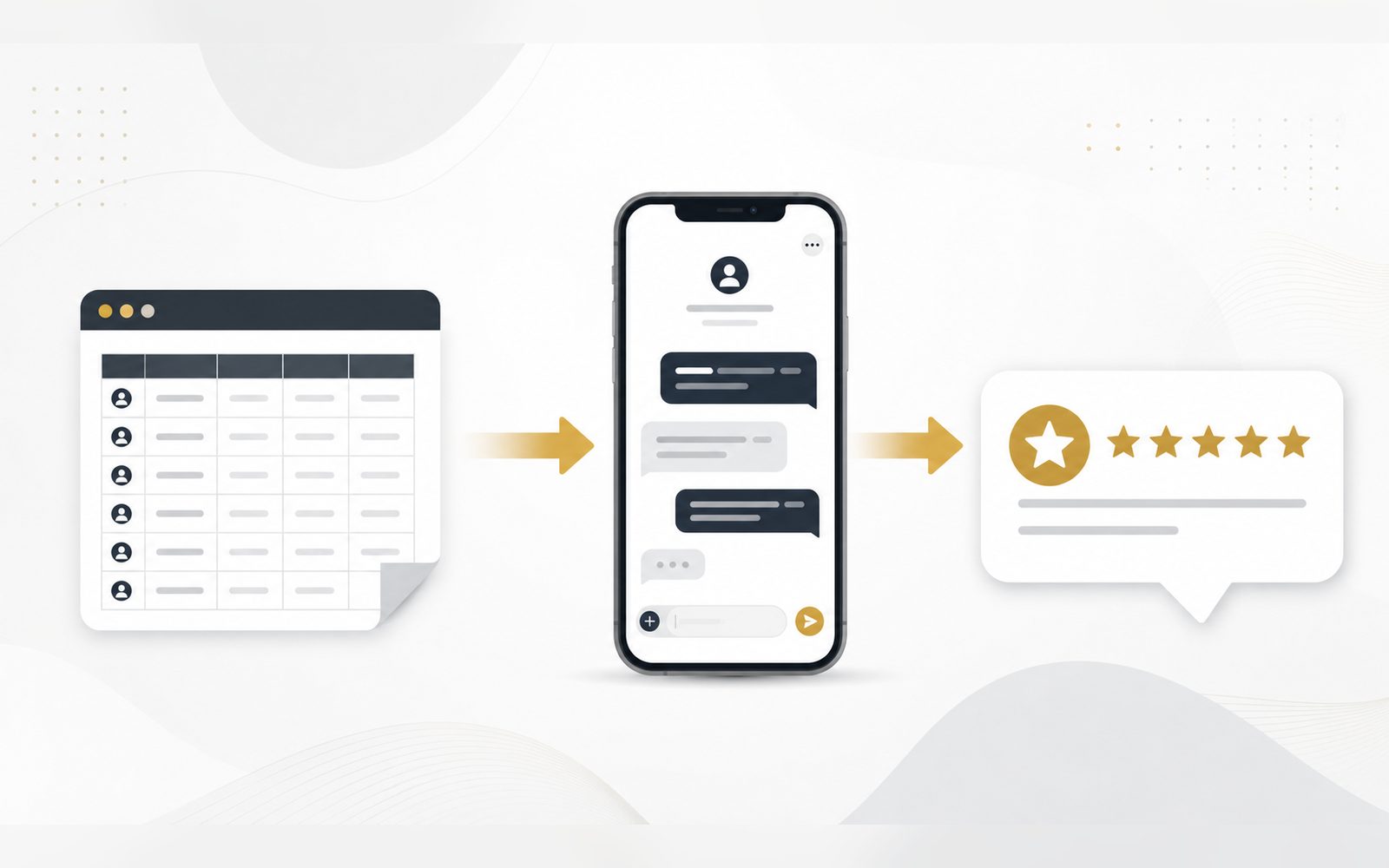
This is where workflow automation becomes valuable. A form submission should not sit unnoticed in an inbox. It should trigger a simple process: notify the business, confirm receipt with the customer, organize the lead details, and make follow-up easier.
Reviews help build trust before you respond
Fast response gets attention. Reviews help build confidence.
BrightLocal's 2026 Local Consumer Review Survey found that 49% of consumers trust online reviews as much as personal recommendations. The same survey reported that 85% of consumers say positive reviews make them more likely to use a business, while 77% say negative reviews make them less likely to choose one.
That means reviews are not separate from lead generation. They are part of the conversion path.
A customer may find your business on Google, visit your website, scan your reviews, and then decide whether to request a quote. If your website has no review signals, no recent testimonials, or no easy way to contact you, you are asking the customer to take a bigger leap of faith.
Review automation can help by making it easier to request feedback after a job is complete. A simple, professional follow-up message can encourage happy customers to leave a review while the experience is still fresh.
How Sherlock Solutions helps businesses respond faster
Sherlock Solutions helps businesses improve the parts of their online presence that directly affect trust and conversion.
That can include custom websites built to look professional, load quickly, and work well on mobile devices. It can also include lead capture systems, quote forwarding, AI-assisted automation, review automation, and practical workflows that help businesses respond faster without adding unnecessary complexity.
The goal is not to replace the personal side of your business. It is to make sure good opportunities do not fall through the cracks.
A clean website, simple form, automated notification, and faster follow-up process can make a small business look more organized and easier to work with. For many customers, that is enough to choose you over the next company.
Final thought: the first business to respond often feels like the best choice
Customers are busy. They do not want to fight with a broken website, wait days for a callback, or wonder whether their message went anywhere.
If your website makes it easy to ask for help, and your lead management system helps you respond quickly, you give your business a better chance to win the work.
Sherlock Solutions can help you build a website and lead capture workflow that turns more visitors into real conversations.
Ready to make your website easier to trust, easier to use, and easier to convert? Contact Sherlock Solutions to start building a smarter online presence.
Frequently asked questions
Why does fast lead response matter for small businesses?
Fast lead response matters because online prospects often contact more than one business. When you respond quickly, you increase your chances of starting the conversation before a competitor does.
What is a lead capture system?
A lead capture system is the process your website uses to collect customer information, such as quote requests, contact forms, appointment requests, or service inquiries.
How can automation help with lead management?
Automation can notify your team when a new lead comes in, send a confirmation to the customer, organize lead details, and create follow-up reminders.
Why are mobile-friendly websites important for service businesses?
Many customers search from their phones. A mobile-friendly website makes it easier for them to read, call, request a quote, and book an appointment.
How do online reviews affect website conversion?
Online reviews help customers decide whether they trust your business. Strong, recent reviews can make people feel more comfortable requesting a quote or appointment.