
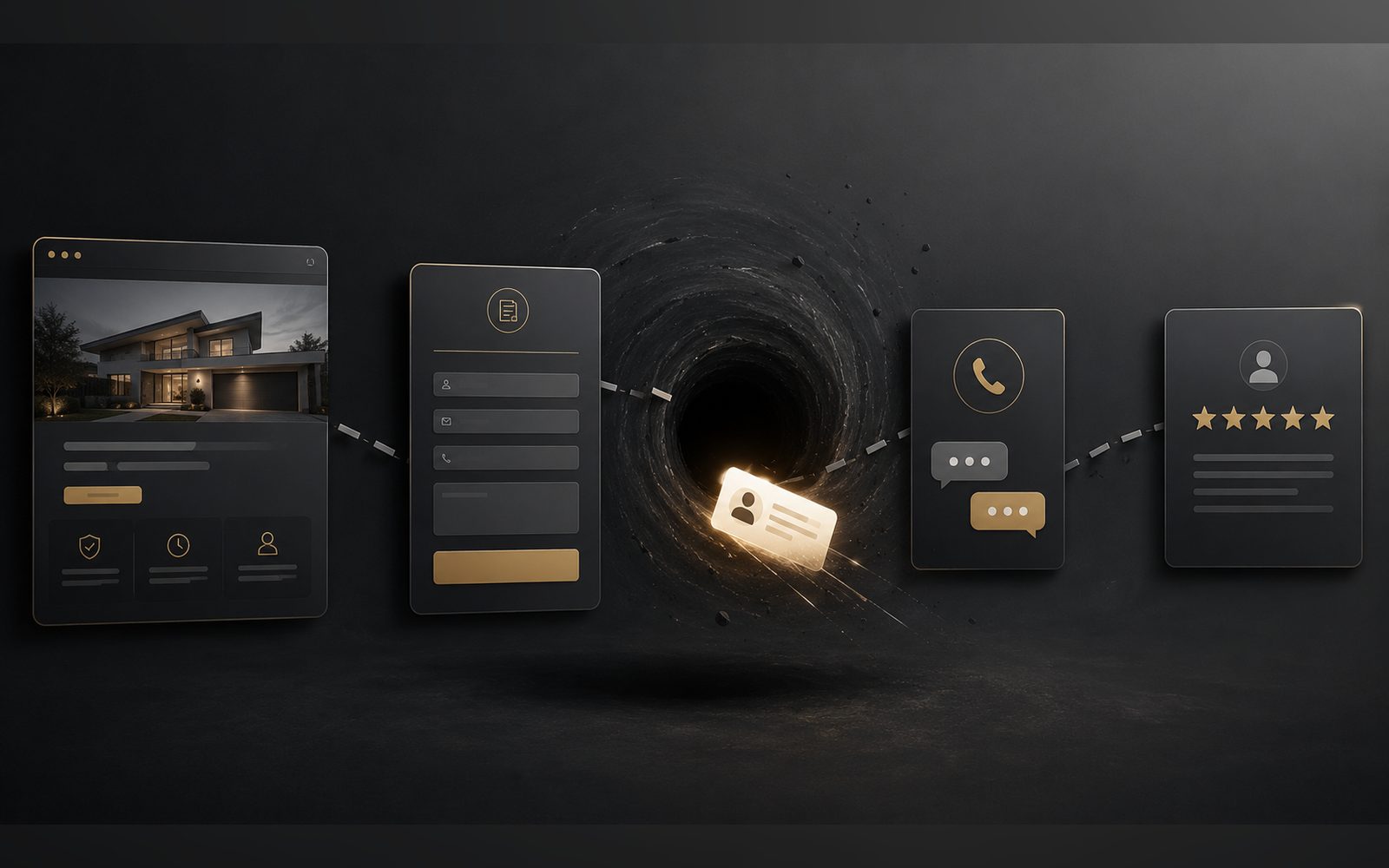
A business owner can spend time and money building a website that looks good, only to still wonder why it is not bringing in enough leads.
The homepage may look clean. The services may be listed. The contact form may technically work. The business may even have strong reviews online.
But there is often a hidden problem: the pieces are not working together.
A customer visits the website, reads about the service, checks a few reviews, and fills out a quote request form. Then the experience slows down. The form submission lands in an inbox. No confirmation gets sent. The business owner sees it later but is busy. Someone plans to follow up, but the day gets away from them.
By the time the business responds, the customer may have already contacted two other companies.
That lost lead may never look like a failure. It just looks like silence.
Your website may not be the whole problem
When a website is not producing enough business, many owners assume they need more traffic, better ads, or a nicer design. Sometimes that is true. But in many cases, the issue is not only the website.
The problem is what happens around the website.
A business website should do more than explain who you are. It should support the full customer journey. That means helping visitors understand your services, trust your business, contact you easily, and receive a clear response.
A website can look professional and still lose opportunities if the forms are clunky, reviews are hard to find, or follow-up depends on someone manually checking an inbox at the right time.
A website alone is not enough anymore
A website used to act like a digital brochure. It listed your services, showed your phone number, and gave people a basic way to contact you.
Today, customers expect more.
They want to quickly understand what you do, see proof that you are reliable, and take action without friction. This is especially true for service businesses, contractors, consultants, home service companies, and local businesses where trust and timing matter.
If someone is comparing multiple companies, the business that feels easiest to understand and easiest to contact often has the advantage.
That does not mean your website needs to be complicated. It means your online presence needs to feel connected.
The real issue is a disconnected customer journey
Many businesses already have the right ingredients. They have a website. They have a contact form. They have online reviews. They follow up with customers.
But each piece often operates separately.
The website sends people to a form. The form sends an email. Reviews live on a different platform. Follow-up depends on memory. Lead details may not be tracked in a reliable place. Customers may not receive confirmation that their request was received.
From the business side, this may feel normal. From the customer side, it can feel uncertain.
Did the form go through? Will someone call back? Is this business organized? Should I contact someone else?
Those small moments matter. Customers may not know what your internal process looks like, but they can feel when the experience is smooth or disjointed.
A form submission is not the finish line
A quote request form or contact form is not the end goal. It is the beginning of a sales conversation.
When someone fills out a form, they are showing interest. They are giving your business a chance to respond, build trust, and move the relationship forward.
That moment should not be treated like just another email.
A good lead capture process makes the next step clear. The customer should know their request was received. The business should receive the details quickly. The follow-up process should be easy to manage.
This is where a lead capture system can make a real difference. It does not need to be complicated. Even simple routing can send confirmations, notify the right person, and reduce the chance that a lead gets missed.
Follow-up is where interest becomes opportunity
Customers often reach out when they are actively trying to solve a problem. They may need a project estimate, a service appointment, a consultation, or a quick answer before making a decision.
If the response is slow or unclear, that interest can fade.
Fast follow-up helps your business feel attentive and professional. It shows the customer that their request matters. It also reduces the chance that they keep searching and choose someone else.
This does not mean every small business needs to respond instantly at all hours. It means the process should help the customer feel acknowledged and help the business avoid missed opportunities.
Follow-up should not depend entirely on memory. Manual processes work until the phone rings, jobs get busy, emails pile up, and someone forgets to respond.
A better system creates consistency.
Reviews are part of the sales process
Online reviews are not just a reputation tool. They are part of how customers decide whether to contact you in the first place.
A visitor may read your reviews before they submit a form. They may compare your business to another company based on the quality, recency, and tone of customer feedback.
That means reviews should be connected to the rest of your online presence.
Strong reviews help reduce hesitation. They answer the quiet question every customer has: “Can I trust this business?”
A reputation builder can also help after the work is complete. Many happy customers will not leave feedback unless the process is easy and timely. A simple, repeatable review request process helps turn good customer experiences into visible proof for future customers.
Automation should make the experience more human
Some business owners hear “automation” and worry that it will make their business feel cold or robotic. But good automation should do the opposite.
It should help customers feel seen faster.
A confirmation message lets someone know their request was received. A lead notification helps the business respond sooner. A reminder helps prevent follow-up from being forgotten. A review request makes it easier for satisfied customers to share their experience.
AI-assisted automation can also help organize lead details, summarize customer inquiries, draft response options, or classify requests by service type. The point is not to replace the relationship. The point is to support it.
What a connected online presence feels like
A connected online presence feels simple from the customer's perspective.
They land on a service page. They understand what the business does. They see reviews that build trust. They submit a simple request. They receive confirmation. The business follows up clearly.
Nothing about that feels overly technical to the customer. It just feels professional.
Behind the scenes, the business benefits too. Lead details are easier to manage. Follow-up becomes more consistent. Review requests happen more reliably. The website becomes part of a larger system instead of a standalone page online.
Where Sherlock Solutions fits in
Sherlock Solutions helps businesses connect the pieces of their online presence so their website does more than look good.
That can include website builds, lead capture, quote forwarding, reputation building, and practical AI-assisted tools that help businesses respond more consistently.
The goal is not to overcomplicate your business or build a massive system you do not need. The goal is to make your online presence cleaner, more professional, and better connected to the way your business actually operates.
For many small businesses, the opportunity is not just getting more traffic. It is doing a better job with the interest they already receive.
Final takeaway: your website should not work alone
A website is often the first impression, but it should not be the only part of the customer journey.
Forms, reviews, follow-up, and automation all play a role in whether a visitor becomes a real lead. When those pieces are disconnected, businesses can lose opportunities without realizing it.
When they work together, customers feel more confident, the business looks more professional, and leads become easier to manage.
Ready to make your website, forms, reviews, and follow-up work together? Sherlock Solutions can help you build a cleaner online presence with practical automation designed around how your business actually operates.
Frequently asked questions
What is the hidden lead problem?
The hidden lead problem happens when customers show interest, but disconnected systems cause slow responses, missed follow-up, weak review visibility, or lost opportunities.
Why should website forms connect to follow-up?
A form submission is only valuable if someone responds. Connecting forms to follow-up helps reduce missed leads and gives customers a clearer experience.
Do small businesses need a CRM to manage website leads?
Not always. Many businesses can start with simpler systems like form notifications, quote forwarding, customer confirmations, lead tracking, and follow-up reminders.
How do reviews help a website convert visitors?
Reviews help potential customers feel more confident before contacting a business. They reduce hesitation and support trust.
Can automation make a business feel less personal?
Poor automation can feel impersonal, but good automation helps customers get acknowledged faster while keeping the human relationship at the center.